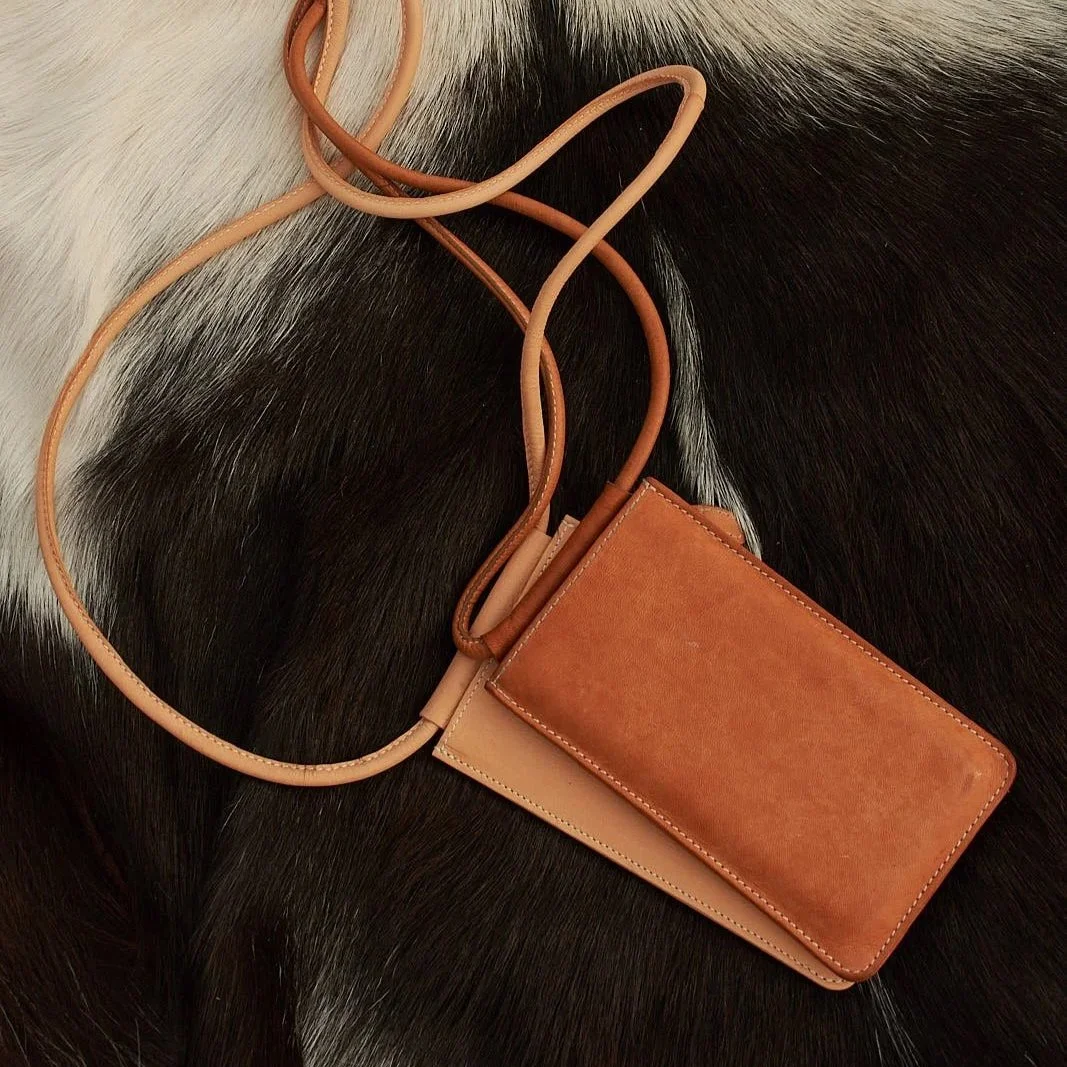
Leather care: How to properly care for natural leather
Our leather is purely vegetable-tanned and left in its natural state. Through milling, it becomes wonderfully soft while keeping the skin's true texture alive: scars, scratches, folds, and even mosquito bites.
Leather left close to its natural state lives alongside you. Over time, it grows softer and more supple, developing a quiet patina of its own. Caring for it is not about doing much, but simply doing the right thing, every now and then.
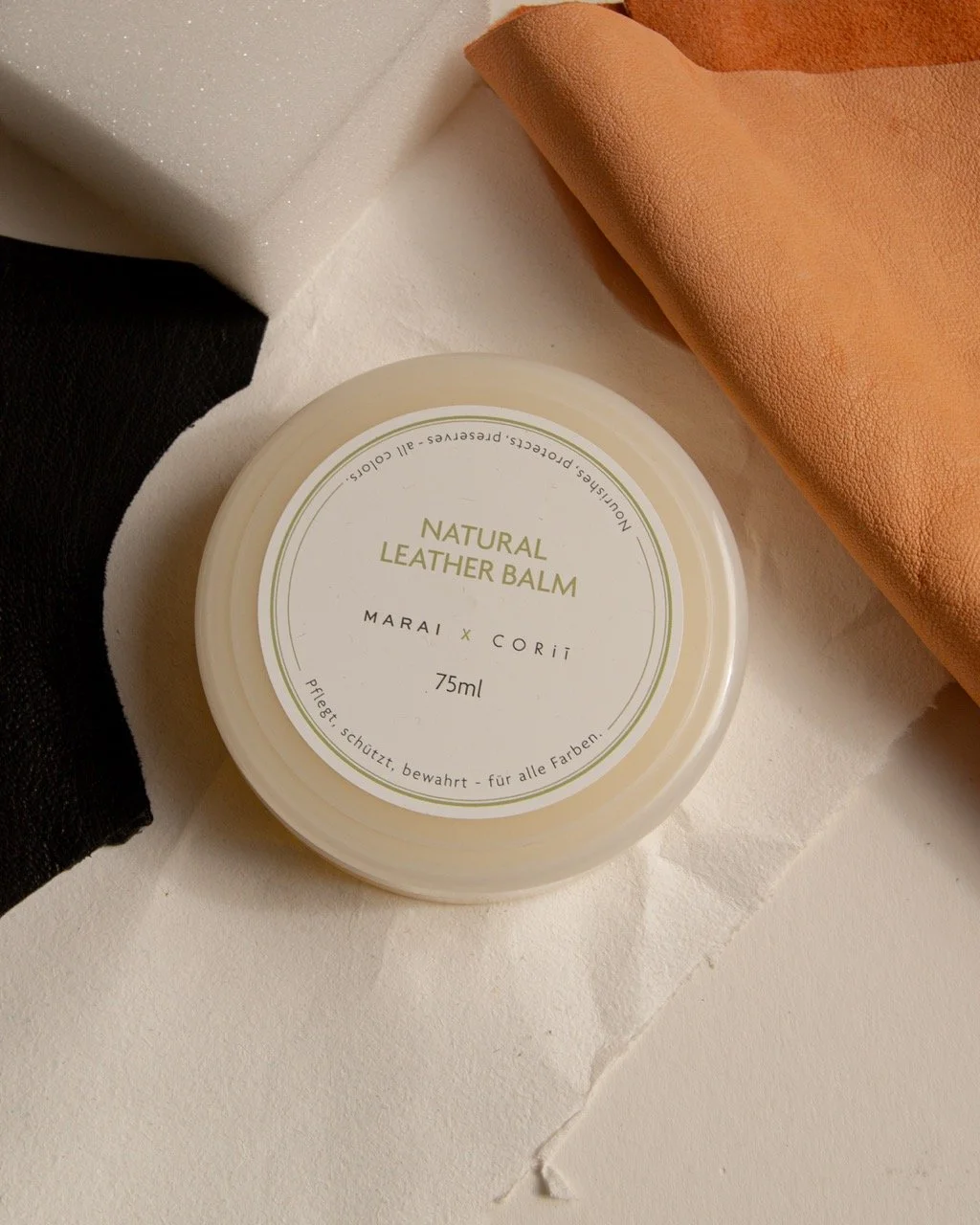
Leather Balm
CHF 14.00
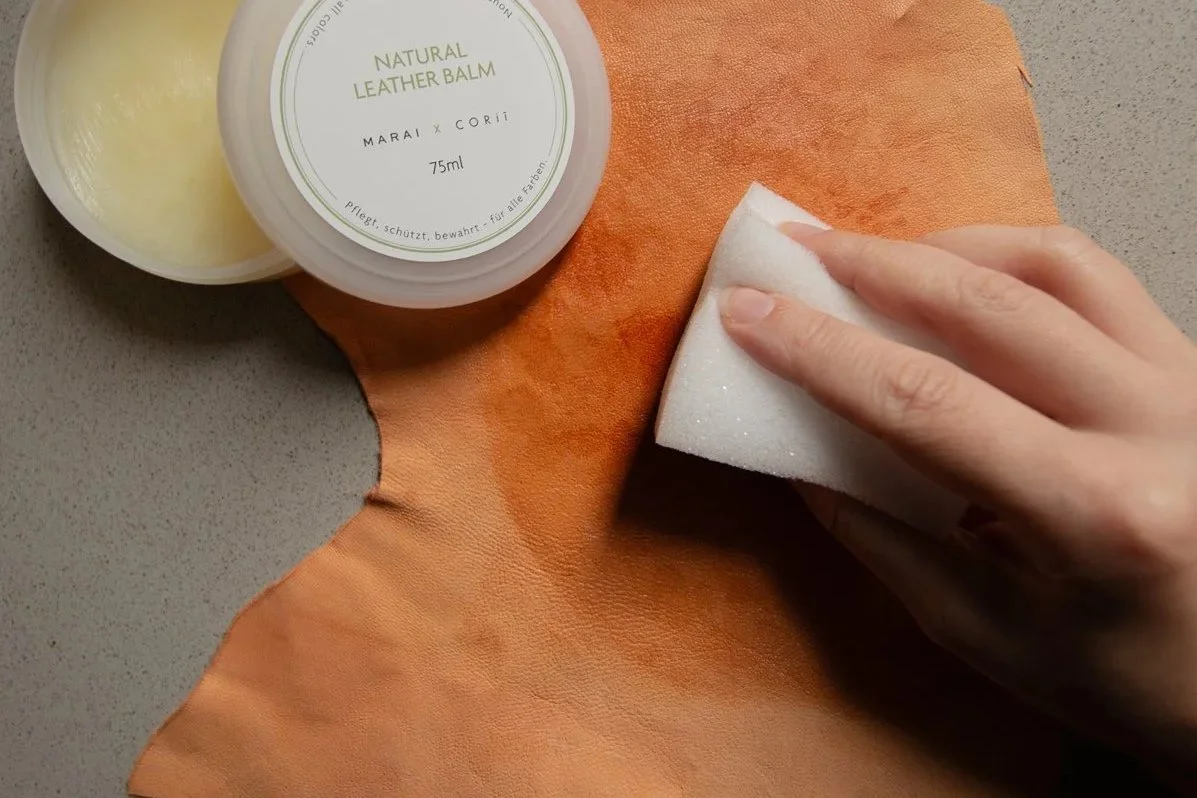
Beeswax and jojoba oil nourish the leather with rich oils, protect its surface, and bring its natural color back to life. Suitable for smooth leather.
Caring for leather in three steps
1 Cleaning
Gently sweep away dust and dirt from the leather using a dry, soft cloth or a soft brush. No pressure needed.
2 Apply balm
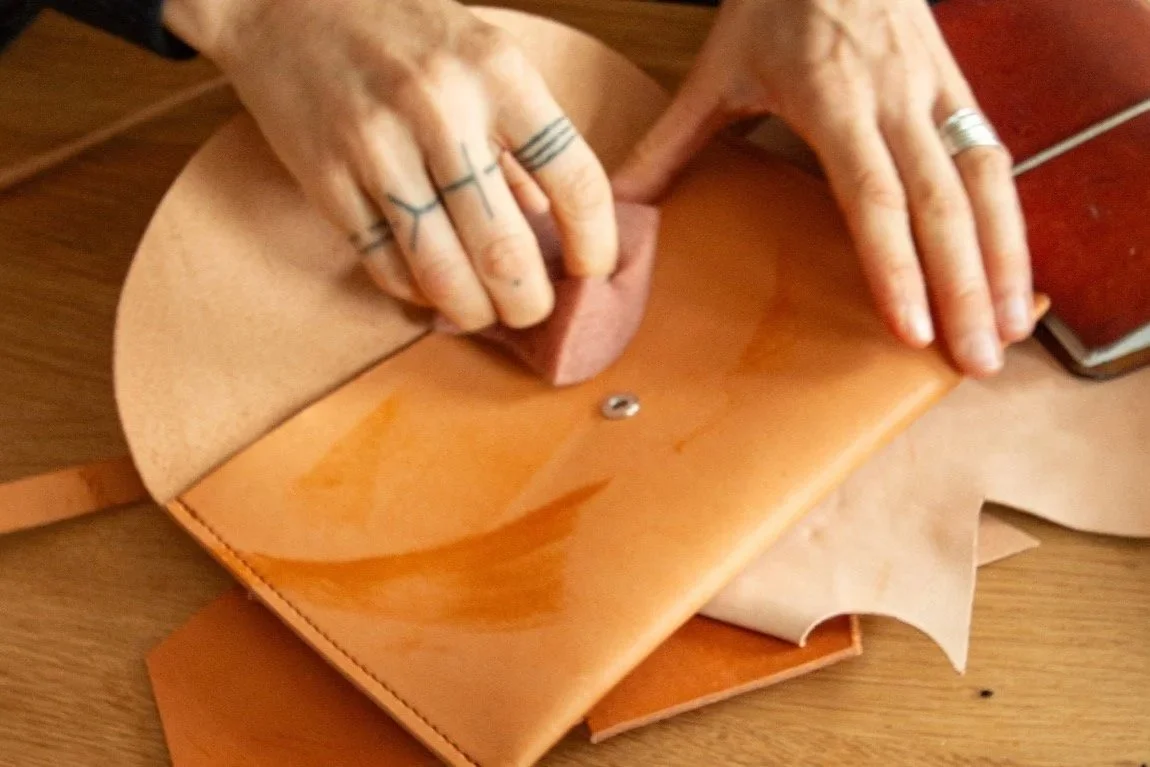
Apply the balm sparingly and work it in evenly with the sponge. A thin layer absorbs better than a thick one.
3 Buffing
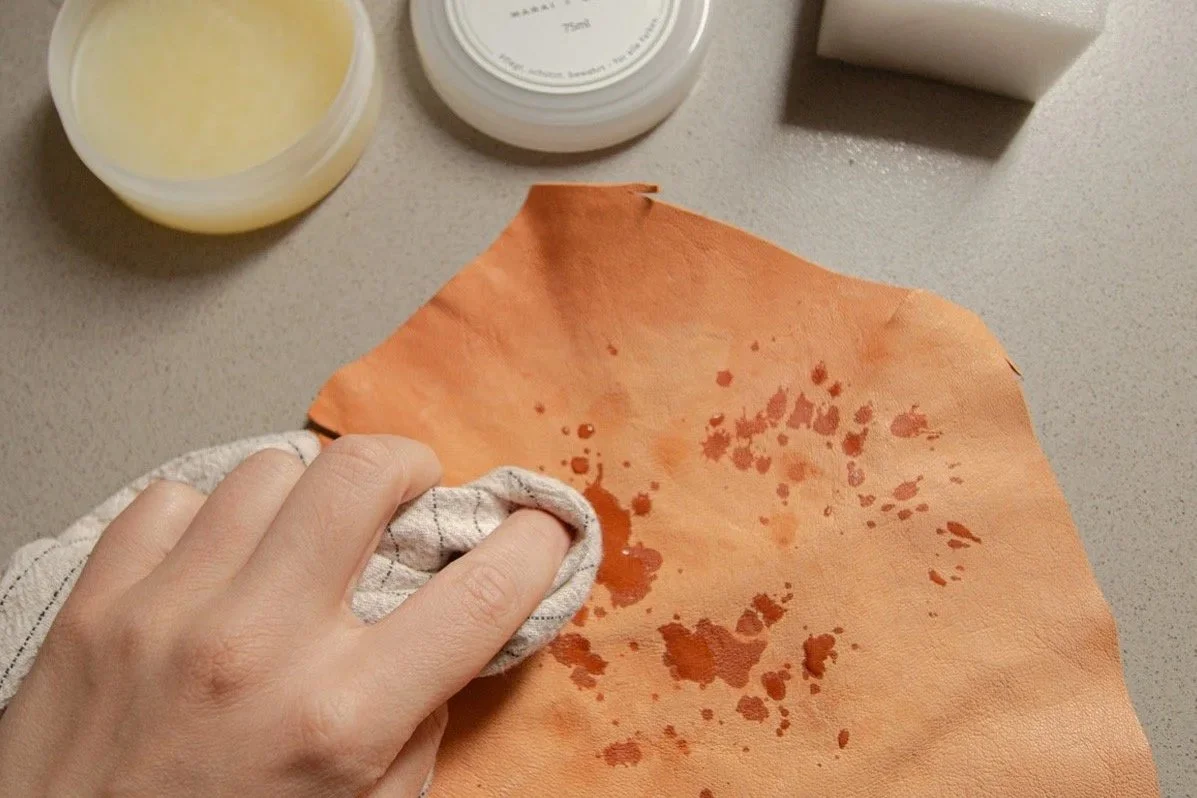
Let it soak in briefly, then polish it thoroughly with an undyed, smooth cotton cloth. This will leave a soft, natural sheen.
Tip: Try the balm on a hidden spot first.
Natural leather can look a little deeper in color after nourishing.
Leather in everyday life: tips for every moment
How often should you care for your leather piece?
Before you wear your leather for the first time, give it a light, careful treatment with leather balm. This keeps it soft, makes the surface a little more resilient, and lets the patina develop evenly. Well-conditioned leather is also much less likely to show marks from light moisture.
After that, there is no fixed rhythm. A good rule of thumb is once or twice a year – depending on how often you carry your bag and what it faces out in the world. Nourish it especially when it feels thirsty, or before it meets the heavier days of rain and weather.
If the leather gets wet
Gently dab away moisture with an absorbent cloth, without rubbing. You can stuff bags loosely with undyed paper so they keep their shape as they dry. Let the leather dry slowly at room temperature, away from heaters and direct sunlight.
Once the leather is completely dry, you can massage in a thin layer of balm if it needs a little nourishment. This keeps it soft and cared for.
The first raindrops can sometimes sting. Over time, their marks fade or simply become part of the whole.
What You Should Avoid
Avoid household cleaner, soaps, and sprays not made for leather. When caring for it, less is always more—nourish it lightly and repeat if needed, rather than overburdening the skin all at once.
Our leather balm is made for smooth leather. Suede and nubuck prefer to stay dry, brushed gently rather than soothed with balm.
A little care, a lifetime of patina ♡
Patina: Why vegetable-tanned leather changes over time
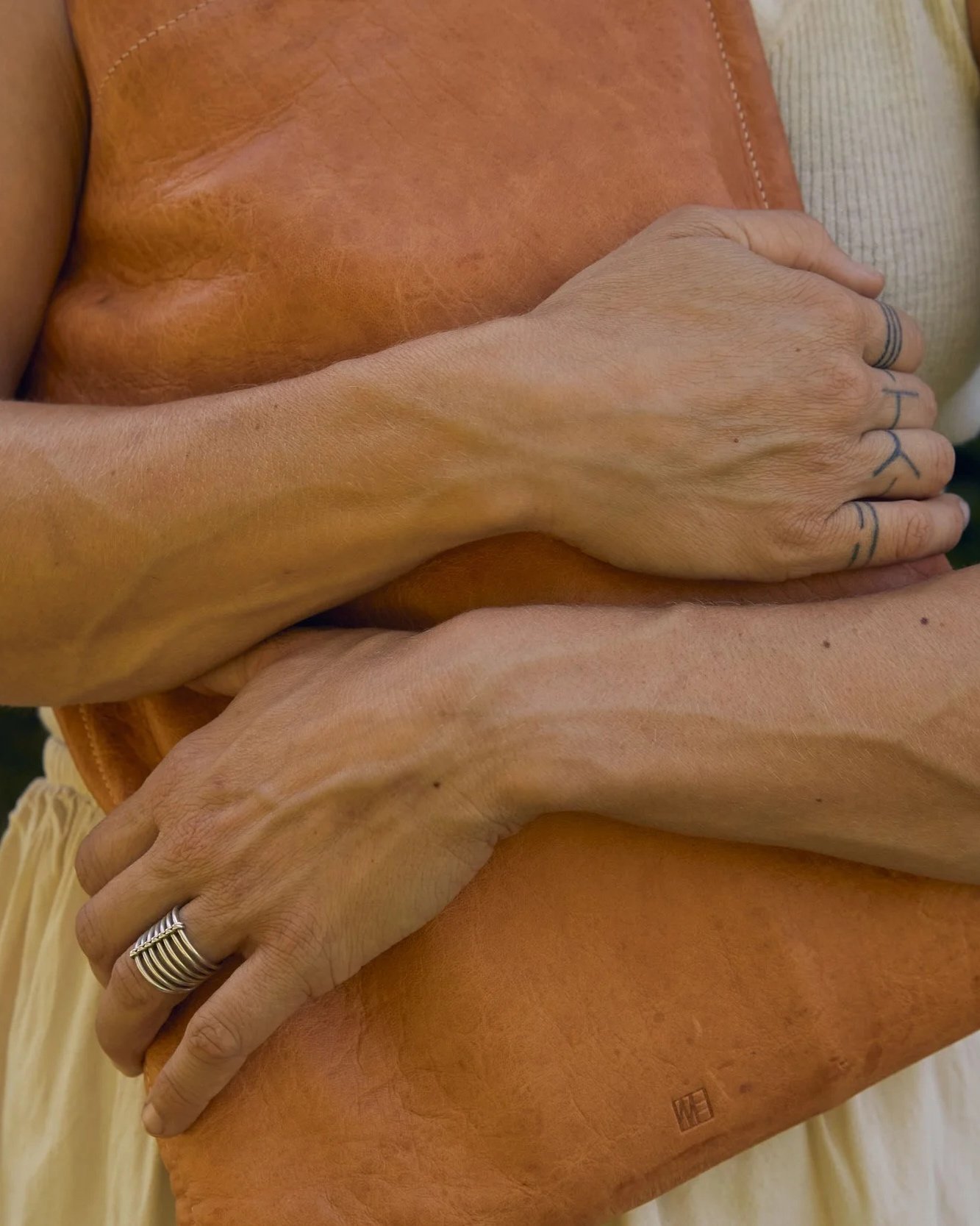
Sunlight, touch, moisture, and daily use cause natural, vegetable-tanned leather to change. This is not a flaw, but part of its character: The tanning agents used in the vegetable-tanning process react with light, air, and the environment. Over time, the leather develops a patina all its own. Regular, sparing care helps ensure that this patina develops evenly.
Light scratches can often be gently massaged away with your finger. A little balm can also help nourish the surface and soften the marks.
More about this in the journal: Nature breathes – just like our skin
How to care for leather - FAQs
-
Our leather is naturally resilient and asks for little in return. A light treatment before its first journey, and an occasional touch of care thereafter, keeps it supple, shields the surface, and lets it age into a quiet, even patina.
-
The balm comes with a sponge. A soft, un dyed cotton cloth is also ideal for buffing; dyed cloths can transfer colour.
-
Beeswax and jojoba oil. They nourish the leather, protect its surface, and let its natural colour breathe.
-
It works beautifully on smooth leather, though it isn't meant for suede or nubuck.
Do you have any other questions? Write to us at hallo@marai.ch. We look forward to hearing from you and are happy to help.